Access to Advanced Heart Imaging Remains Limited Despite Growth in Imaging Centers, Study Finds
Older Americans face significant barriers to advanced cardiovascular imaging, with cardiac CT, MRI, and PET scanners concentrated in large urban hospitals
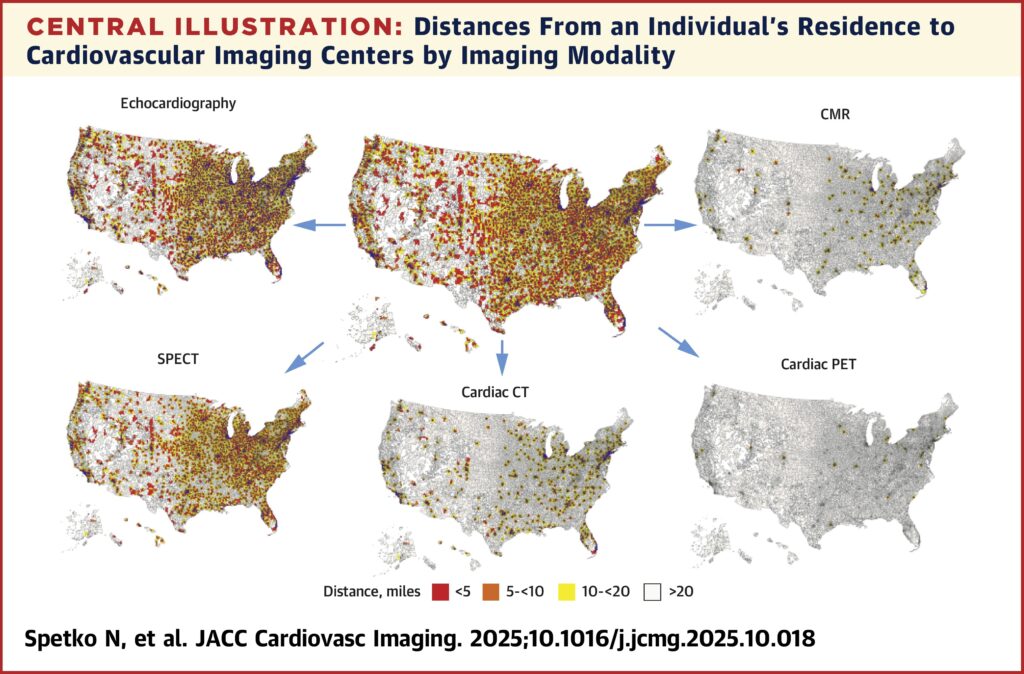
A new nationwide study of over 64 million older U.S. Medicare patients has found that, despite a slight increase in the number of cardiovascular imaging centers between 2018 and 2021, access to advanced heart imaging remains limited, particularly for patients outside major metropolitan areas. The study was published recently in JACC: Cardiovascular Imaging.
Researchers discovered that while typical distances to echocardiography and traditional nuclear stress tests were around 3–4 miles, patients would need to travel much farther for advanced tests: 8 miles for cardiac CT, 17 miles for cardiac MRI, and nearly 90 miles for cardiac PET. These advanced imaging techniques, which are increasingly emphasized in clinical guidelines for diagnosing and guiding treatment in heart disease, remain largely confined to academic medical centers in large cities.
“Even as more imaging centers have opened, access to advanced cardiovascular imaging has not kept pace,” said lead author, Nicholas Spetko, MD, Cardiology Fellow at Beth Israel Deaconess Medical Center and graduate student at T.H. Chan Harvard School of Public Health]. “Our findings show that where patients live continues to shape the type of care they can receive, and this may be a mechanism behind the growing gap in heart health outcomes seen in rural settings.”
Proximity Does Not Always Equal Access
The study also suggested that living close to an imaging center does not guarantee access. In urban settings, people living nearest to imaging centers were actually least likely to receive imaging, a pattern also observed among lower-income patients. This paradox suggests that social and structural barriers—such as income, language, or healthcare literacy—may limit care even when facilities are nearby.
Barriers to Guideline-Directed Care
Cardiovascular imaging is central to modern heart care, informing diagnosis, risk assessment, and treatment decisions for conditions such as coronary artery disease and heart failure. The authors note that geographic barriers to access could make it harder for clinicians to follow guideline-directed care—particularly when advanced imaging is required.
“Distance is only one piece of the puzzle,” said senior author, Jordan Strom, MD, MSc, Associate Professor at Harvard Medical School. “We need to understand how social determinants of health, including poverty, education, and access to primary care, interact with geography to affect who actually gets these essential tests.”
Next Steps and Solutions
The study highlights the need for innovative approaches to expand access, including:
- Mobile imaging units and outreach programs in rural regions
- Artificial intelligence–assisted point-of-care ultrasound to support frontline clinicians
- Incentive programs to encourage investment in high-need areas
The authors call for strategic policies and community-level interventions to ensure that all patients can benefit from advances in cardiovascular imaging.
About the Study
The analysis used data from over 64 million Medicare Fee-for-Service and Medicare Advantage beneficiaries from 2018 to 2021. Investigators measured each participant’s distance to the nearest cardiovascular imaging center and examined how distance, clinical and social factors affected their likelihood of receiving imaging.